Google makes SynthID Detector available to the public
The free tool checks images, video and audio for Google’s SynthID watermark. Its scope is limited to that signal, and a result cannot establish how much AI was used.
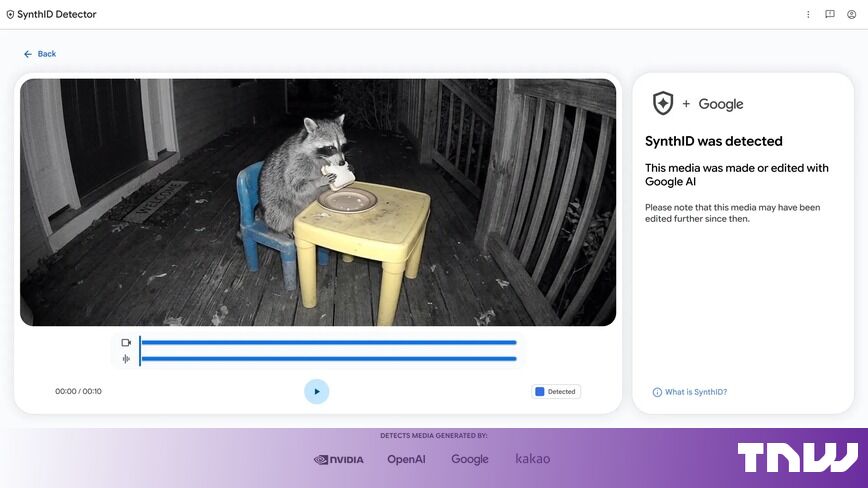
Google has opened SynthID Detector globally in English, allowing the public to check media for the company’s watermark. The free tool checks images, video and audio for SynthID, a hidden signal attached to some AI-generated material. Google says the detector identifies media made with its AI and partners including OpenAI, Nvidia and Kakao.
The detector checks one watermark
SynthID Detector reports whether a file carries the SynthID mark; it does not determine whether a file is wholly AI-generated or only AI-edited. Google’s example result says content was made or edited with Google AI, while warning that the file may have changed since. That distinction matters for organisations assessing evidence: a positive result points to a watermark, not a complete account of a file’s creation or subsequent handling.
The detector also cannot identify all AI-generated media, because it searches for SynthID rather than every watermark or verification method. The source reports that watermarks can sometimes be removed, further limiting what a negative result can establish. For policy teams and organisations handling digital evidence, the stated scope means this check can inform an assessment but cannot settle provenance on its own.
Google says watermarking spans media
Google says it has marked more than 180 billion images and videos with SynthID since 2023, as well as 240,000 years of audio. Those figures describe the volume of content watermarked, not how many files the public detector has checked. The source also says checks in Search, the Gemini app and Chrome handle more than one million requests each day.
Google first introduced an early version of the detector in May 2025 for journalists, media professionals and researchers. The public release expands access beyond that initial audience, and Google DeepMind’s Pushmeet Kohli announced global English availability on Wednesday. The stated availability is therefore broad by geography, while the language offered at launch remains English.
Partners and access conditions shape use
Google says the tool flags media produced with AI from Google and partners OpenAI, Nvidia and Kakao. The source says support for Apple is expected soon, but gives no date or further detail. OpenAI adopted SynthID in May and also operates a verification page that checks images and audio for SynthID and C2PA signals, according to the source.
Using the site requires sign-in with a Google, OpenAI or Apple account, as reported by Engadget. That requirement is a practical condition for access, while the report does not specify how submitted files are stored or handled. Google’s models named in the source include Gemini, Imagen, Lyria and Veo, whose content the company says SynthID marks.
The scope leaves evidence questions open
The source does not set out an independent audit, appeal process or a formal legal status for SynthID Detector. It describes a public technology tool rather than a regulatory decision, and provides no company response to a regulator or legal complaint. The available information also does not explain whether Google plans to publish performance measures for detection across different file types or editing conditions.
For organisations relying on media checks, the next relevant details would be how the detector handles altered files and how its findings are documented. Google’s own warning that a file may have changed since creation makes that chain of handling pertinent. The source supplies no timetable for additional languages or Apple support beyond the word “soon”.
The practical record is therefore a globally available English check for a specific watermark. Its result can support review, but it cannot establish that media was entirely produced by AI or identify material without SynthID. Any assessment of a file still depends on evidence beyond this detector.