MINIGRAPH tests magnet-guided graphene implant system in animals
INBRAIN Neuroelectronics says the EU-funded project demonstrated magnetic guidance for graphene electrodes in laboratory and large-animal tests. The work received €3.93m over 45 months from October 2022.
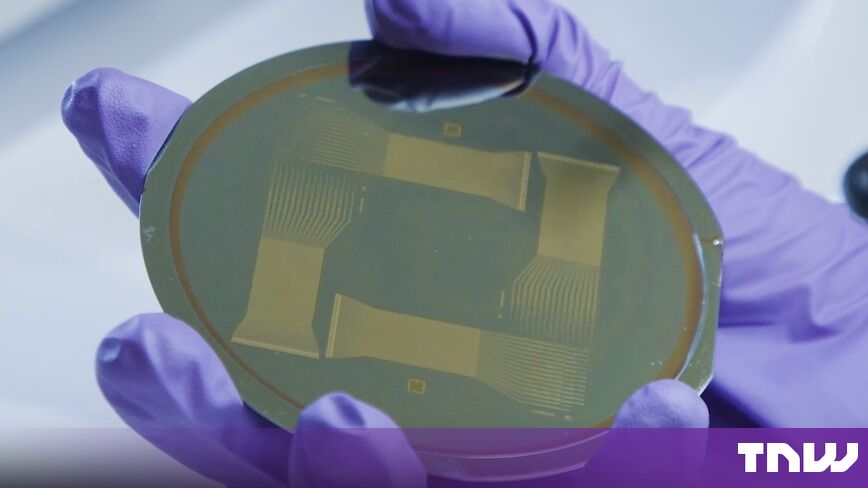
INBRAIN Neuroelectronics says a robot guided graphene electrodes through straight and curved paths in a large animal model. The procedure was tested in a laboratory and animal setting under EU-funded MINIGRAPH, which ended with the reported results. The work concerns implantation methods for brain-computer interfaces, while the source reports no human test of this procedure.
The European Innovation Council funded MINIGRAPH through Horizon Europe, with an EU contribution of €3.93m over 45 months from October 2022. Those details describe the project’s funding and duration, not a regulatory authorisation or a clinical decision. The available account identifies no regulator, legal proceeding, or approval stage for the robotic procedure.
Magnetic guidance was tested in animals
Nanoflex Robotics and ETH Zurich built the implantation system around remote magnetic navigation. A magnetic carrier transports the thin probes, while the robot guides their movement under X-ray imaging. The system can take straight or curved routes to the brain’s surface and deeper areas, according to the reported description. INBRAIN Neuroelectronics said tests took place in the laboratory and in a large animal model.
The stated clinical objective is to develop implants that record brain activity, interpret signals and provide stimulation. The project’s first target is Parkinson’s disease, for which deep brain stimulation is already used with implanted electrodes. The proposed approach aims to make therapy responsive to individual signals, but the account describes an aim rather than an established patient treatment. No patient outcome for the magnet-guided procedure is reported.
Project funding and prototype details
The project brought together INBRAIN Neuroelectronics, Nanoflex Robotics and ETH Zurich alongside other partners. The source names Catalan Institute of Nanoscience and Nanotechnology, Imec, Fraunhofer-Gesellschaft, Leiden University Medical Center and Palacký University Olomouc as participants. It says the Catalan Institute coordinated the group, while Switzerland funded ETH Zurich’s part. The EU contribution and project period were attributed to the project website.
The consortium combined graphene probes with compact electronics and software in one implant prototype. The electronics were designed to decode signals from hundreds of brain points, according to the account. INBRAIN Neuroelectronics makes thin-film electrodes from graphene, described as a sheet of carbon one atom thick. Accelerated ageing tests supported more than 10 years of projected stability, the company said; toxicity and biocompatibility studies were also conducted.
Human testing remains a separate step
The source distinguishes the animal testing of the robotic implantation procedure from a separate first-in-human study. INBRAIN said in April that it had completed enrolment in that study, which concerns graphene interfaces for brain decoding and mapping. The account does not say that the magnet-guided robot was used in that study. It also provides no results from the enrolled patients.
The reported project outcome is therefore a feasibility demonstration in laboratory and large-animal settings. The account gives no regulator’s assessment, clinical authorisation, or date for a next test of this implantation system. It does not report the company’s response to a regulatory decision because no such decision is identified. Follow-up reporting would need to establish whether further testing is planned and whether the procedure reaches human evaluation.